Read the Article at HuffingtonPost
The 50 Best Moments For Women In 2011, what about meditation?
Read the Article at HuffingtonPost
Occupy Consciousness: Healing the Collective Mind
We all want a better world, yet like many we don't have time to protest for social change. What if there was a way to uplift the collective mind through our own consciousness? Not by thinking about it, but by transcending to the deepest, most silent level of unity where we're all connected.
In support of social change, there's another powerful approach, one that's complimentary to all viewpoints -- an approach essential to social evolution, yet so quiet it's easily drowned out amid the general media's focus on the obvious and sensational.
That approach: meditation.
"Change Begins Within"
Real change begins within. Our world is as we are. It will always be necessary to affect responsible change on the outside, but whatever good can be accomplished in society depends on the quality of heart and mind of those creating the change -- individually and collectively.
Besides, everybody needs to dissolve stress, and research shows that effective meditation is the most powerful stress buster there is. Stress wears you down. It clouds your mind and diverts you from right decisions. Doctors say it can kill you. And the total stress of all individuals coalesces to become collective stress--affecting the overall quality of life in society.
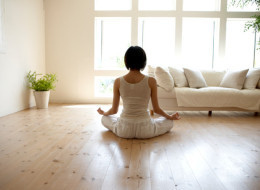
Imagine: countless numbers of people across the country, in their homes or together in meditation halls, sitting, closing their eyes and transcending, experiencing a level of consciousness where we're all interconnected. What if, by silently stirring this underlying, unified field, an influence of orderliness and cooperation could be created throughout collective consciousness -- dissolving social tensions and relieving government gridlock, stimulating economic confidence and supporting positive change? Learn how to meditate
Read the Article at HuffingtonPost
Dr. Oz recommends meditation for heart health, high cholesterol and diabetes
Meditation is emerging as a powerful stress-buster. Research shows that it can have health benefits equivalent to or better than some of the leading medications for reducing high blood pressure and high cholesterol. Dr. Oz, a meditator himself, talks about how the Transcendental Meditation technique reduces the three main risk factors for heart disease.
"As a heart surgeon, I see the effects of stress on the heart as the leading cause of death in the Western world. This meditation, we believe, can help a lot of people. It's important to understand exactly how TM reduces stress and stress-related disorders."
Stating that high cholesterol is the first major risk factor for heart disease, Dr. Oz cited a one-year study on people with high cholesterol who practiced the TM technique. The study found that cholesterol was reduced by 10 percent, or 30 milliliters. "Now, if you are on medication for cholesterol, we hope you can get 30 milliliters lower," he said.
The second risk factor for heart disease, cautioned Dr. Oz, is high insulin or diabetes. "A randomized clinical trial funded by the NIH found improvements in insulin resistance, glucose and even insulin levels themselves, after just four months of TM practice, in over 100 people who had coronary blocks. This dramatic change was significantly better than just teaching people about their health."
Meditation also helps reduce hypertension -- the third main risk factor -- according to a randomized control study on people suffering from high blood pressure. "Those practicing the TM technique had a significant reduction in systolic and diastolic blood pressure, of 11 and 6, respectively. Those are big numbers. We don't get these kind of results all the time with medications."
The outcome of a long-term randomized trial on patients with coronary heart disease showed similar promise. Those practicing the TM technique during this 10-year period were found to have 47 percent less incidence of mortality, heart disease and stroke. "This impact in the TM group is stunning -- unimaginable. When you talk about these causes of death and you can reduce them by that much, as well as non-fatal strokes and non-fatal heart attacks, these are spectacularly large impacts."
If we're under stress, it's even harder -- we're more likely to overeat and find ourselves less motivated to exercise and more susceptible to smoking, drinking and other addictive behaviors. Meditation adds a powerful engine to your health resolutions. What's more, it's easy!
"As a heart surgeon, I see the effects of stress on the heart as the leading cause of death in the Western world. This meditation, we believe, can help a lot of people. It's important to understand exactly how TM reduces stress and stress-related disorders."
Stating that high cholesterol is the first major risk factor for heart disease, Dr. Oz cited a one-year study on people with high cholesterol who practiced the TM technique. The study found that cholesterol was reduced by 10 percent, or 30 milliliters. "Now, if you are on medication for cholesterol, we hope you can get 30 milliliters lower," he said.
The second risk factor for heart disease, cautioned Dr. Oz, is high insulin or diabetes. "A randomized clinical trial funded by the NIH found improvements in insulin resistance, glucose and even insulin levels themselves, after just four months of TM practice, in over 100 people who had coronary blocks. This dramatic change was significantly better than just teaching people about their health."
Meditation also helps reduce hypertension -- the third main risk factor -- according to a randomized control study on people suffering from high blood pressure. "Those practicing the TM technique had a significant reduction in systolic and diastolic blood pressure, of 11 and 6, respectively. Those are big numbers. We don't get these kind of results all the time with medications."
The outcome of a long-term randomized trial on patients with coronary heart disease showed similar promise. Those practicing the TM technique during this 10-year period were found to have 47 percent less incidence of mortality, heart disease and stroke. "This impact in the TM group is stunning -- unimaginable. When you talk about these causes of death and you can reduce them by that much, as well as non-fatal strokes and non-fatal heart attacks, these are spectacularly large impacts."
If we're under stress, it's even harder -- we're more likely to overeat and find ourselves less motivated to exercise and more susceptible to smoking, drinking and other addictive behaviors. Meditation adds a powerful engine to your health resolutions. What's more, it's easy!
ADHD in Women: Is There a Role for Meditation?
Can Meditation improve Gross National Happiness?
"Neoclassical economics have long quantified happiness through measurements in consumption and profits. Yet we now find ourselves in a post-plenty economy, one that lends itself to a new, less consumer-orientated mentality. The growing shift in people's orientation away from material gain and toward genuine happiness is a powerful indicator that the old way of measuring progress and wealth is no longer relevant." Shelly A. Lewis writes of a growing trend in countries around the world to measure Gross National Happiness as an indicator of progress in the nation.
Hopefully measuring national happiness, will help us focus on deeper more meaningful aspects of life, and lead people to realize that transitory pleasures never bring lasting happiness. In my work for the David Lynch Foundation
A regular meditation practice allows one to contact the unchanging
Read the Article at HuffingtonPost
Subscribe to:
Posts (Atom)